

Global Broker Regulation Inquiry App
About WikiFX



Fed Hikes Rates as Inflation Threat Returns

WikiFX
|


Abstract:The Federal Reserve raised its benchmark interest rate for the first time since July 2023, signalling that stubborn inflation has become serious enough to outweigh concerns about maintaining easier financial conditions.
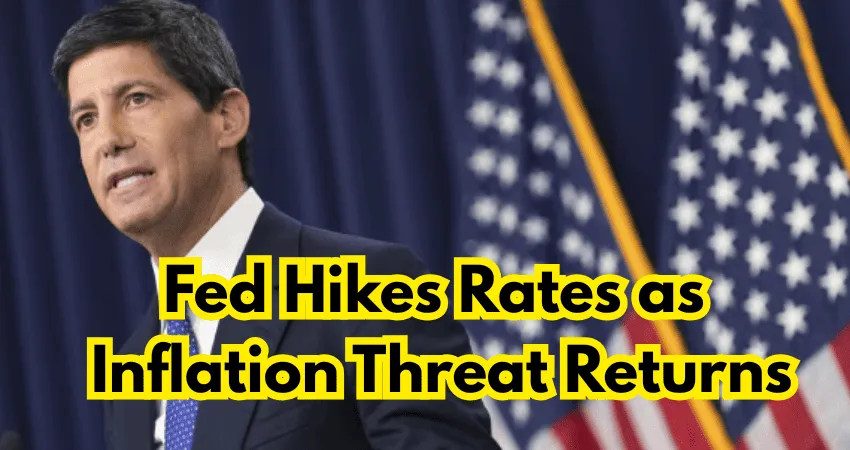
The Federal Reserve raised its benchmark interest rate for the first time since July 2023, signalling that stubborn inflation has become serious enough to outweigh concerns about maintaining easier financial conditions.
The Federal Open Market Committee voted unanimously to lift the federal funds rate by 25 basis points to a range of 3.75% to 4%. Policymakers also raised their median projection for the federal funds rate at the end of 2026 to 4.1%, from 3.8% previously, suggesting that another increase could still be on the table before the year ends.
The decision places the US central bank on a more restrictive path at a time when investors had been watching closely for signs that inflation was finally cooling. Instead, recent price data have complicated that outlook, with core inflation rising more than expected in August.
Fed Chairman Kevin Warsh said policymakers remained concerned that price pressures were appearing across too many categories of goods and services. He argued that the latest inflation readings did not provide sufficient evidence that underlying pressures were easing in a meaningful way.
The message immediately unsettled financial markets. Two year Treasury yields, which are particularly sensitive to expectations for Federal Reserve policy, rose to about 4.73% after initially moving lower. The yield on the benchmark 10 year Treasury note also climbed during Warsh's press conference and moved above 5%.
The rate increase also exposed a growing policy disagreement between the central bank and President Donald Trump. Trump said US interest rates should be reduced to 1% or below and criticised the level of borrowing costs after the Fed announcement. He nevertheless said he retained confidence in Warsh, while also accusing the Federal Reserve board of being hostile and political.
Warsh offered little indication that political pressure would alter the central bank's course. His comments instead emphasised the need to restore price stability, while describing the US economy as resilient and potentially capable of stronger performance.
The latest projections show how dramatically the inflation outlook has influenced the Fed's thinking. Sixteen officials now see at least one additional rate increase during 2026, compared with six officials in June who expected at least two increases for the year. The median projection for 2027, however, points to no further increase from current levels.
Policymakers have also pushed back their expectation for inflation to return to the Fed's 2% objective. The median forecast now places that milestone in 2029, a year later than previously projected.
For global markets, the implications extend beyond the United States. Higher US rates can support the dollar and increase pressure on emerging market currencies, while elevated Treasury yields can make US assets more attractive relative to riskier markets. Investors across Asia therefore face another period in which changes in US monetary policy could influence capital flows, borrowing costs and currency markets.
Malaysia is particularly exposed to those global movements through the ringgit, bond market and trade links with the United States and other major economies. A prolonged period of elevated US interest rates could influence foreign fund flows into Malaysian assets and affect the cost of financing for businesses and consumers. For Bursa Malaysia investors, the Fed's renewed focus on inflation means global interest rate expectations may remain an important driver of market sentiment even as domestic economic conditions continue to evolve.

Disclaimer:
The views in this article only represent the author's personal views, and do not constitute investment advice on this platform. This platform does not guarantee the accuracy, completeness and timeliness of the information in the article, and will not be liable for any loss caused by the use of or reliance on the information in the article.
WikiFX Broker
Latest News
OROKU EDGE Review 2026: What Traders Should Know About Withdrawal & Slippage Reports
WikiFXRockGlobal Review for India: Which Licence Was Cancelled on 19 July 2024?
WikiFXIf You Still Struggle To Make Money After Passing a Prop Firm Challenge
WikiFXNZDCHF: Bearish Now, But Is Smart Money Preparing the Reversal?
WikiFXLeading the Transparency Movement, The Trust Dialogue with AUS GLOBAL
WikiFXMalaysia Police Busted a Scam Call Centre & Arrested 3 Chinese Nationals
WikiFXIndonesia's new finance minister faces an uphill battle on fiscal credibility
WikiFXTenX Prime Review 2026: Revisiting Withdrawal Denials & PAMM-related Fund Loss Complaints
WikiFXWeekend CFD Trading Moves Beyond Gold as Brokers Add Oil, Silver and Indices
WikiFXFX Trading Share Falls Sharply Across Retail CFD Market
WikiFX