


IG Review for India 2026: RBI Alert List, Regulation, Login, and Forex Risk
IG review for India in 2026: see the RBI Alert List entry, overseas regulation, login checks, forex limits, and a clear broker safety checklist.
Original

简体中文
繁體中文
English
Pусский
日本語
ภาษาไทย
Tiếng Việt
Bahasa Indonesia
Español
हिन्दी
Filippiiniläinen
Français
Deutsch
Português
Türkçe
한국어
العربية
اردو




Abstract:European crackdown removes 1,400+ fraudulent trading platforms, exposing AI-built fake broker networks and cross-border call centers targeting investors.

Online trading scams in Europe are organized fraud schemes that use fake broker platforms, call center sales scripts, and AI-generated websites to solicit deposits from retail investors and then block withdrawals or disappear entirely. These schemes matter now because European authorities have just dismantled more than 1,400 illegal domains linked to investment fraud, revealing industrial-scale infrastructure, AI misuse, and cross-border call center operations that persist despite repeated takedowns. This report defines the threat, details current enforcement and trends, and explains the broader impact and what to watch next for investor protection and policy.
Online trading scams in Europe typically pose as forex, crypto, or stock brokers, funneling victims from polished domains to aggressive call centers that push large deposits with promises of high returns and “AI-driven” strategies. Many victims discover months later that funds were never invested; platforms block withdrawals, shut down, or demand new payments to unlock balances, a pattern seen repeatedly in Europol- and Eurojust-supported cases. German regulator BaFin reports at least 20 nearly identical AI-branded websites with minimum deposits of €250, none licensed, none with verifiable ownership, illustrating mass-produced fraud templates.

In October 2025, German investigators with BaFin, Europol, and Bulgarian authorities dismantled over 1,400 illegal domains in “Operation Heracles,” following a June 2025 action that blocked about 800 domains; authorities counted roughly 20 million subsequent access attempts, underscoring persistence and scale. Officials say perpetrators increasingly use AI to spin up convincing clone sites at speed, materially raising the baseline sophistication and volume of fraudulent trading platforms. Europol continues cross‑border data work to trace funds, identify call centers, and disrupt payment facilitation, reflecting the scams transnational nature and need for coordinated enforcement.
Victim recovery remains uncertain because many call centers operate from jurisdictions with weak cooperation, limiting asset seizure and restitution despite infrastructure takedowns and digital asset seizures where possible. Regulators are intensifying public warnings about unauthorized investment services, finfluencer promotions, and AI-branded trading offers, linking the threat to wider retail investor protection and digital asset fraud risks. Expect more infrastructure-focused operations, faster domain churn by fraudsters via AI tooling, and continued pressure for stronger payments due diligence and cross‑border financial crime frameworks in the EU.
BaFins executive Birgit Rodolphe notes that fraudsters are “becoming increasingly professional,” using AI to mass-produce illegal sites that lure investors, aligning with observed clone-site clusters and €250 on‑ramp patterns. Field experience from Europol-supported actions shows that disabling hosting, seizing servers, and tracing facilitators can weaken networks, but sustained deterrence hinges on closing payment channels and targeting call center hubs. For retail investor protection, verifying authorization in official registers and distrusting guaranteed-return “AI” pitches remain the most reliable first-line defenses against fake forex and crypto brokers.

Disclaimer:
The views in this article only represent the author's personal views, and do not constitute investment advice on this platform. This platform does not guarantee the accuracy, completeness and timeliness of the information in the article, and will not be liable for any loss caused by the use of or reliance on the information in the article.
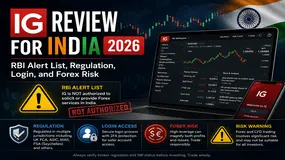
IG review for India in 2026: see the RBI Alert List entry, overseas regulation, login checks, forex limits, and a clear broker safety checklist.

Orbex, a Cyprus-based brokerage entity, has recorded 30 exposure complaints on WikiFX, a leading forex broker regulation inquiry tool, so far. Other review websites have also recorded a healthy number of complaints against the brokerage firm. These complaints largely talk about the alleged profit confiscations by the broker in the name of trading violations, difficulty in accessing fund withdrawals, capital losses due to artificial slippage, etc. In this Orbex review, we have investigated user complaints and provided a regulatory overview of the broker.
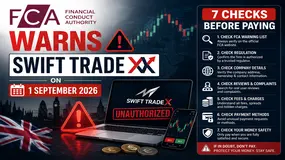
FCA warns Swift TradeX in a notice first published and updated on 1 September 2026. The UK Financial Conduct Authority says the firm may be providing or promoting financial services without permission, is not authorised, and may be targeting people in the UK. The notice names the website swifttradexai.com, a Worcester address and a UK telephone number, but also cautions that unauthorised businesses may use incorrect or borrowed contact details. The confirmed issue is authorisation status—not a court finding about every transaction. Anyone considering a payment should stop, verify the firm independently, and avoid using contact information supplied by the platform itself.
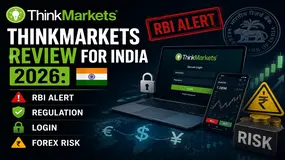
ThinkMarkets review for India: check the RBI Alert List, overseas entities, regulation, login security, forex rules, costs, withdrawals, and leverage risk.
WikiFXWikiFXWikiFXWikiFXWikiFXWikiFXWikiFXWikiFXWikiFXWikiFX