


India Q1 FY27 GDP Growth Hits 7.8%: 3 Scenarios for INR and Gold
India's Q1 FY27 GDP grew 7.8%, beating a 7.4% poll and RBI's 7.0% projection. See three conditional scenarios for INR, rates and gold.
Original

简体中文
繁體中文
English
Pусский
日本語
ภาษาไทย
Tiếng Việt
Bahasa Indonesia
Español
हिन्दी
Filippiiniläinen
Français
Deutsch
Português
Türkçe
한국어
العربية
اردو




Abstract:Learn how 7 signs to identify forex scammers using verified red flags like unregulated brokers, guaranteed returns, and withdrawal issues. Protect your investments with expert-backed strategies.
 Contents
A forex scammer is an individual or organization that uses deceptive practices to trick investors into handing over money under the false promise of high returns from foreign exchange (forex) trading. These scams often involve fake brokers, fraudulent signal sellers, rigged platforms, or pyramid schemes that simulate profitability while siphoning funds. Unlike legitimate financial professionals who operate under strict regulatory oversight, forex scammers typically lack proper licensing, provide no verifiable track record, and use psychological manipulation to gain trust.
Forex trading itself is a legitimate global market where currencies are bought and sold, with an average daily volume exceeding $7 trillion as of 2024. However, its decentralized nature and high leverage options make it a prime target="_blank" kwlink="6384064000816950219725">target for fraud. According to the U.S. Commodity Futures Trading Commission (CFTC), forex fraud has consistently ranked among the top investment scams reported by consumers. The consequences for victims can be severe—loss of life savings, damaged credit, and emotional distress.
Understanding how to spot a forex scammer is not just about avoiding financial loss; it's a critical component of financial literacy. In educational contexts, teaching students to recognize investment fraud builds long-term decision-making skills and promotes responsible engagement with financial systems. As digital platforms expand access to trading, they also increase exposure to sophisticated scams that mimic real services.

This article outlines the most common types of forex scams, their warning signs, and actionable steps to verify legitimacy—empowering individuals to make informed, secure investment choices.
One of the most consistent indicators of a forex scam is the promise of guaranteed profits with little or no risk. Legitimate forex trading involves inherent volatility and uncertainty—market movements are influenced by geopolitical events, economic data, and central bank policies, none of which can be predicted with 100% accuracy. Any claim suggesting otherwise contradicts fundamental principles of finance.Scammers often use phrases like “risk-free returns,” “double your money in 30 days,” or “monthly gains of 20–30% guaranteed” to lure inexperienced investors. These claims exploit cognitive biases such as overconfidence and fear of missing out (FOMO), particularly targeting those new to investing. A 2024 Investopedia analysis emphasized that no trading strategy can eliminate market risk, and anyone asserting otherwise is likely engaging in fraud.
The reality is that even professional traders experience losing streaks. According to data from major regulated brokers, the majority of retail forex traders lose money over time due to leverage misuse and emotional decision-making. Therefore, when evaluating a forex opportunity, ask: Does this align with realistic market performance? If the answer is no, proceed with extreme caution.
To protect yourself, remember the basic rule of investing: higher potential returns always come with higher risk. Regulatory bodies like the Financial Conduct Authority (FCA) in the UK and the Australian Securities and Investments Commission (ASIC) require all financial advertisements to include risk disclosures for this reason. If a forex provider fails to mention risks or downplays them, its a strong signal of illegitimacy.
A legitimate forex broker must be registered with a recognized financial authority. Regulatory compliance ensures transparency, fair trading practices, and investor protection through mechanisms like segregated accounts and dispute resolution. Common regulators include the Commodity Futures Trading Commission (CFTC) and National Futures Association (NFA) in the United States, the FCA in the United Kingdom, ASIC in Australia, and CySEC in Cyprus.
Scammers frequently operate without any license or falsely claim affiliation with these agencies. Some create fake registration numbers or clone websites of real firms—a tactic known as “firm mimicry”. The CFTC warns that investors should independently verify a brokers status through official regulator databases rather than relying on information provided by the broker.
For example, in 2022, Thailands Bank of Thailand issued a public alert after uncovering unlicensed operators like Forex-3D, which had no legal authorization to offer forex services. Similarly, the U.S. Securities and Exchange Commission (SEC) maintains a list of unregistered entities involved in forex fraud.
To check a brokers legitimacy:
If a broker resists verification, uses vague regulatory language (e.g., “internationally compliant”), or claims to be regulated in offshore jurisdictions with weak oversight, treat it as a red flag.
Forex scammers often initiate contact through cold calls, social media messages, or dating apps—a method increasingly linked to “pig butchering” scams where fraudsters build romantic relationships before soliciting investments. These interactions are unsolicited and designed to create emotional urgency.
Once contact is made, scammers apply pressure to act quickly, using phrases like “limited-time offer,” “closing in 5 minutes,” or “only three spots left.” This tactic, known as FOMO (fear of missing out), prevents victims from conducting due diligence. The U.S. Secret Service and Financial Crimes Enforcement Network (FinCEN) have highlighted this pattern in recent fraud alerts, noting its prevalence in cross-border forex scams.
Legitimate financial professionals do not pressure clients into immediate decisions. Reputable brokers provide educational resources, demo accounts, and time to review terms. If someone insists you must invest now or lose the opportunity, it is almost certainly a scam.
Additionally, be wary if the person contacting you avoids video calls, refuses to share verifiable identification, or redirects communication to private channels like WhatsApp or Telegram. These behaviors isolate the victim from third-party verification and increase control over the narrative.
A 2024 Action Fraud report documented a case where a victim received a cold call offering forex investment advice, followed by demands for upfront tax payments to withdraw funds—resulting in a $50,000 loss. Such cases underscore the importance of resisting urgency and verifying every claim independently.
Some fraudulent brokers manipulate trading conditions to ensure client losses. One common technique is inflating bid-ask spreads—the difference between buying and selling prices—beyond normal market levels. For instance, while the typical spread for EUR/USD is 1–3 pips under standard conditions, scam brokers may show spreads of 7 pips or more, especially during news events.
This manipulation increases transaction costs significantly, eroding account balances over time. Since most retail traders rely on small price movements for profit, excessive spreads make consistent gains nearly impossible.
Beyond spreads, some platforms engage in price fixing, slippage manipulation, or outright trade rejection. These actions occur on proprietary or unregulated platforms where there is no independent audit trail. In extreme cases, trades are not executed at all—the platform merely simulates activity to give the illusion of trading.
To detect platform manipulation:
Regulated brokers connected to liquidity pools (like banks and institutional traders) offer transparent pricing. If a broker discourages demo testing or restricts withdrawal of demo profits, consider it a warning sign.
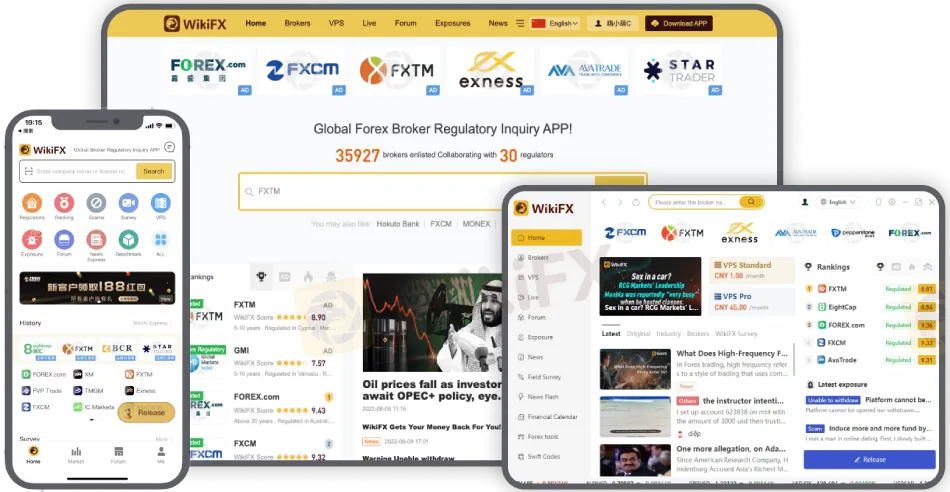
One of the clearest signs of a forex scam is the inability to withdraw funds. WikiFX reports that approximately 60% of forex scam complaints in 2023 involved denied or delayed withdrawals. Scammers often allow initial deposits and even small withdrawals to build trust, but once larger sums are invested, they impose obstacles.
Common tactics include:
In one documented case, a U.S. trader was told he needed to pay a 15% “tax” to release his funds, with threats of IRS action if unpaid—a complete fabrication since the IRS does not collect fees for private brokers.
Legitimate brokers process withdrawals within a few business days and clearly outline procedures in their terms of service. Any request for extra payments to access your own money should be treated as fraud.
Before investing, review the brokers withdrawal policy and search online for user experiences. Independent forums like ForexPeaceArmy or Trustpilot can reveal patterns of withdrawal issues.
Signal sellers and automated trading robots are popular targets for fraud. Scammers sell subscriptions to “proven” trading signals or software that supposedly generate consistent profits with minimal effort. However, many of these services deliver random or outdated information, or worse, signals designed to cause losses.
Warning signs include:
Some robot vendors offer free trials—but only after signing up with a specific (often unregulated) broker, ensuring losses through manipulated execution.
To verify legitimacy:
Organizations like Dukascopy offer verified market analysis and signals as part of regulated services, contrasting sharply with opaque third-party providers.
Ponzi and pyramid schemes are prevalent in forex fraud. In a Ponzi scheme, returns to earlier investors are paid from new investors funds, not actual trading profits. Eventually, the scheme collapses when inflows slow, leaving most participants with losses.
Pyramid schemes focus on recruitment—participants earn commissions for bringing in new members rather than from trading success. These models violate securities laws and have no sustainable revenue source.
Both types often use forex as a cover story, claiming sophisticated algorithms or insider access. However, no real trading occurs; its simply a transfer of money from new victims to earlier ones.
The CFTC has issued warnings about hybrid scams combining forex branding with multi-level marketing structures, particularly targeting younger investors via social media.
Spotting a forex scammer requires vigilance, skepticism, and proactive research. Always verify regulatory status, question unrealistic promises, and avoid pressured decisions. Use demo accounts to test platforms, and never invest more than you can afford to lose.
Education is the strongest defense. By understanding the mechanics of fraud, investors can navigate the forex market safely and avoid becoming victims of increasingly sophisticated scams.

Disclaimer:
The views in this article only represent the author's personal views, and do not constitute investment advice on this platform. This platform does not guarantee the accuracy, completeness and timeliness of the information in the article, and will not be liable for any loss caused by the use of or reliance on the information in the article.
India's Q1 FY27 GDP grew 7.8%, beating a 7.4% poll and RBI's 7.0% projection. See three conditional scenarios for INR, rates and gold.
Choosing a forex liquidity provider is not a search for the lowest displayed spread or the longest provider list. It is a broker decision about pricing integrity, depth, routing, credit, reporting, incident response, and client communication. This 2026 guide explains how a forex LP, FX liquidity provider, or liquidity provider forex arrangement fits into a broker’s execution chain; what to test before onboarding; why a “best forex liquidity provider” claim cannot replace due diligence; and how to compare cost beyond commission. Use the execution-quality scorecard, provider questions, routing scenarios, and 90-day onboarding plan to assess whether a liquidity relationship can support your actual client mix, instruments, risk model, and jurisdiction. The goal is not to make a universal ranking. It is to build evidence that your broker can explain, supervise, reconcile, and recover its execution service when market conditions are difficult.
The visible fee in an MT4 white label proposal is rarely the real cost of operating it. For an existing broker, the decision is not simply whether an MT4 white label platform is “cheap” or “expensive.” The real question is whether the commercial model remains viable after integration, support, data, client migration, compliance, and exit costs are included. That is why an MT4 white label cost review should be built as a 24- to 36-month operating case. It should compare three credible choices: 1. Keep the present MT4 setup and improve its weakest controls. 2. Replace the MT4 white label provider but retain the client proposition. 3. Migrate selected clients or products to another platform while running MT4 in parallel. This guide explains how to build that case without relying on headline prices or generic vendor claims.
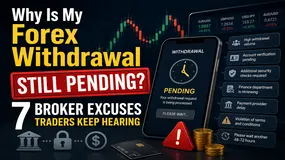
Withdrawal delays are precisely the complaint we keep receiving on WikIFX, a veteran in the forex regulation inquiry space. While some users receive withdrawal access initially and find rejections on their applications later, some fail to receive a single approval. Some delays usually result from genuine compliance requirements that brokers need to adhere to. However, in many cases, traders have accused the broker of repeated excuses as part of its alleged strategy to deny a seamless fund release. A pending withdrawal cannot be an outright indicator of fraudulent activity. Financial institutions, including forex brokerage entities, need to abide by the anti-money laundering (AML) and Know Your Customer (KYC) regulations. However, as the monitoring process stretches beyond weeks or months, traders become frustrated and raise questions over the broker’s reliability.
WikiFXWikiFXWikiFXWikiFXWikiFXWikiFXWikiFXWikiFXWikiFXWikiFX