


India Q1 FY27 GDP Growth Hits 7.8%: 3 Scenarios for INR and Gold
India's Q1 FY27 GDP grew 7.8%, beating a 7.4% poll and RBI's 7.0% projection. See three conditional scenarios for INR, rates and gold.
Original

简体中文
繁體中文
English
Pусский
日本語
ภาษาไทย
Tiếng Việt
Bahasa Indonesia
Español
हिन्दी
Filippiiniläinen
Français
Deutsch
Português
Türkçe
한국어
العربية
اردو




Abstract:Know the pros and cons of Expert Advisors in Forex trading—automation boosts efficiency, but risks like over-reliance and glitches require careful balance.

Forex trading is a fast-paced, high-risk environment where split-second choices may make or break your performance. For many traders, the emergence of Expert Advisors (EAs) changed everything. These automated systems claim to remove the guesswork from trading, but like with every tool, they have pros and disadvantages. In this post, we'll look at the pros and dangers of using Expert Advisors in Forex trading, including how they function, why they're helpful, and where they may fall short. Whether you're a beginner or a seasoned trader, knowing EAs may help you navigate the market more confidently.
 Contents
Expert Advisors are software programs meant to automate Forex trading choices. They use predetermined algorithms to evaluate market data—such as price patterns, volume, and technical indicators—to execute trades on your behalf. Imagine them as your own trading helper, diligently crunching figures as you sleep or sip your morning coffee.
EAs are often connected to platforms like MetaTrader 4 or 5, allowing traders to tailor them to their specific strategies or utilize pre-built versions. They aren't mystical wands, though; they're instruments that are programmed to follow laws. Some concentrate on scalping (rapid, tiny trades), while others seek long-term patterns. What's the appeal? They remove emotion from trading, which may trip up even the most experienced traders. But, to properly understand their worth, let's look at what they bring to the table—and where they could fall short.
One of the most notable advantages of expert advisors is their ability to save time. Forex markets are open 24 hours a day, seven days a week, and no human can watch charts all day. EAs accomplish this for you, identifying opportunities and carrying out transactions without your intervention. Imagine missing a profitable transaction because you were caught in traffic; EAs eliminate that risk.
Consistency is another significant benefit. During a losing run, people are more likely to second-guess or abandon strategies. Expert Advisors stick to their plans, executing transactions based on logic rather than fear or greed. This discipline may be a lifeline in a volatile market. They can also backtest techniques using historical data, allowing you to assess how a system will perform before investing actual money. This is a low-pressure opportunity for newcomers to learn the ropes, while professionals may fine-tune their technique.
There is also the issue of speed. EAs react to market changes in milliseconds, quicker than a human can click “buy” or “sell.” In a game where timing is key, this advantage might increase earnings. Add the capacity to manage many currency pairings at once, and you've got a formidable ally for growing your trading operations.

Expert Advisors shine most brightly in terms of efficiency. Consider this: you are balancing a day job, a family, and trading goals. It takes hours to manually analyze charts, create stop loss orders, and calculate risk. EAs make all of this more efficient. They take care of the dirty work after you've selected your settings, such as a 2% risk per trade or a precise moving average crossing. No more late-night peering at candlestick patterns.
They also decrease human mistakes. Have you ever misinterpreted a signal or fat-fingered a trade? I've done that, and it's not enjoyable to have your account go down due to a rookie error. EAs follow their code exactly, ensuring accuracy. For example, if you teach an EA to purchase when the RSI reaches 30 and sell at 70, it will not hesitate or overthink; it will just execute.
Efficiency applies to risk management as well. EAs may automatically modify position sizes or quit trades to preserve your capital, which is easy to forget in the excitement of the moment. For traders who prefer a hands-off approach, this automation is comparable to employing a tireless employee who never requests a raise. But, as enticing as it sounds, it's not all easy sailing.
Expert Advisors, while their many advantages are not without flaws. One obvious danger is over-reliance. It's easy to let an EA wild and believe it'll make money while you binge-watch your favorite program. However, markets aren't static; circumstances fluctuate, and an EA designed for a trending market may fail during a choppy, sideways phase. I've seen traders deplete their accounts because they didn't adjust their EA when volatility skyrocketed.
Another risk is technical failures. A power outage, internet latency, or platform meltdown can all disrupt your EA, leaving trades dangling or completely missing. I have heard about a player whose EA doubled down on a losing position due to a broken update—ouch. Don't forget about the cost: great EAs aren't cheap, and free ones sometimes have hidden problems. You may either pay upfront or risk your money on untested code.
Then there's the absence of intuition. EAs do not have a “feel” for the market. They will not pick up on a sudden news event, such as a central bank rate rise unless configured to do so. A human trader may recognize difficulty and retreat, but an EA may charge on, ignorant. Over-optimization is also a trap—tweaking an EA to perfection on previous data might render it ineffective in actual trading. It's like preparing for last year's test rather than tomorrow's.
Expert Advisors are important in current Forex trading, but they are not the only factor that contributes to success. The key to success is balance. EAs thrive at carrying out repetitive duties and adhering to a strategy, allowing you to focus on the larger picture. They are like a co-pilot, not the captain. The finest traders I know employ EAs to handle the humdrum while they research macro trends or look for new chances.

Take my friend who trades full-time. During the London session, he scalped EUR/USD with an EA and made consistent profits. However, he is constantly on guard, ready to override it if a critical economic report is due. That hybrid strategy makes use of automation's strengths while maintaining human judgment in control. Data supports this: studies show that automated systems can beat manual trading in controlled settings, but they falter without monitoring during black swan situations.
Automation also helps to make trading more accessible. To utilize an EA, all you need is a willingness to master its eccentricities, not a financial degree. For retail traders, this levels the playing field versus large institutions with analytic teams. However, success isn't assured. An EA is only as effective as its programming and the trader who uses it. If you ignore that, you're giving your money to a robot who has no stake in the outcome.
To summarize, Expert Advisors in Forex trading provide a convincing balance of advantages and risks. They save time, increase efficiency, and impose discipline—all of which are significant benefits for anybody managing a hectic schedule or dealing with emotive issues. However, they are not a set-and-forget solution. You can't completely check out due to technical issues, market fluctuations, and their lack of gut feeling. The sweet spot? Use EAs as a tool, not as a crutch. Combining them with your own market knowledge yields a formula for better, not simply quicker, trading. In a market that never sleeps, that balance might be your competitive advantage.

Disclaimer:
The views in this article only represent the author's personal views, and do not constitute investment advice on this platform. This platform does not guarantee the accuracy, completeness and timeliness of the information in the article, and will not be liable for any loss caused by the use of or reliance on the information in the article.
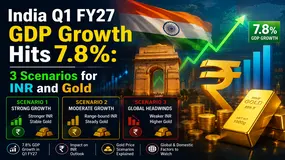
India's Q1 FY27 GDP grew 7.8%, beating a 7.4% poll and RBI's 7.0% projection. See three conditional scenarios for INR, rates and gold.
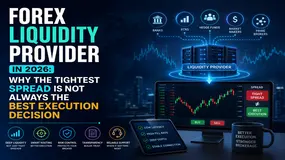
Choosing a forex liquidity provider is not a search for the lowest displayed spread or the longest provider list. It is a broker decision about pricing integrity, depth, routing, credit, reporting, incident response, and client communication. This 2026 guide explains how a forex LP, FX liquidity provider, or liquidity provider forex arrangement fits into a broker’s execution chain; what to test before onboarding; why a “best forex liquidity provider” claim cannot replace due diligence; and how to compare cost beyond commission. Use the execution-quality scorecard, provider questions, routing scenarios, and 90-day onboarding plan to assess whether a liquidity relationship can support your actual client mix, instruments, risk model, and jurisdiction. The goal is not to make a universal ranking. It is to build evidence that your broker can explain, supervise, reconcile, and recover its execution service when market conditions are difficult.
The visible fee in an MT4 white label proposal is rarely the real cost of operating it. For an existing broker, the decision is not simply whether an MT4 white label platform is “cheap” or “expensive.” The real question is whether the commercial model remains viable after integration, support, data, client migration, compliance, and exit costs are included. That is why an MT4 white label cost review should be built as a 24- to 36-month operating case. It should compare three credible choices: 1. Keep the present MT4 setup and improve its weakest controls. 2. Replace the MT4 white label provider but retain the client proposition. 3. Migrate selected clients or products to another platform while running MT4 in parallel. This guide explains how to build that case without relying on headline prices or generic vendor claims.
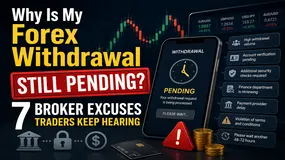
Withdrawal delays are precisely the complaint we keep receiving on WikIFX, a veteran in the forex regulation inquiry space. While some users receive withdrawal access initially and find rejections on their applications later, some fail to receive a single approval. Some delays usually result from genuine compliance requirements that brokers need to adhere to. However, in many cases, traders have accused the broker of repeated excuses as part of its alleged strategy to deny a seamless fund release. A pending withdrawal cannot be an outright indicator of fraudulent activity. Financial institutions, including forex brokerage entities, need to abide by the anti-money laundering (AML) and Know Your Customer (KYC) regulations. However, as the monitoring process stretches beyond weeks or months, traders become frustrated and raise questions over the broker’s reliability.
WikiFXWikiFXWikiFXWikiFXWikiFXWikiFXWikiFXWikiFXWikiFXWikiFX