


IG Review for India 2026: RBI Alert List, Regulation, Login, and Forex Risk
IG review for India in 2026: see the RBI Alert List entry, overseas regulation, login checks, forex limits, and a clear broker safety checklist.
Original

简体中文
繁體中文
English
Pусский
日本語
ภาษาไทย
Tiếng Việt
Bahasa Indonesia
Español
हिन्दी
Filippiiniläinen
Français
Deutsch
Português
Türkçe
한국어
العربية
اردو




Abstract:Key legal developments in the My Forex Funds vs. CFTC case, including the unfreezing of $100 million in assets. Insights into regulatory challenges for prop trading firms.
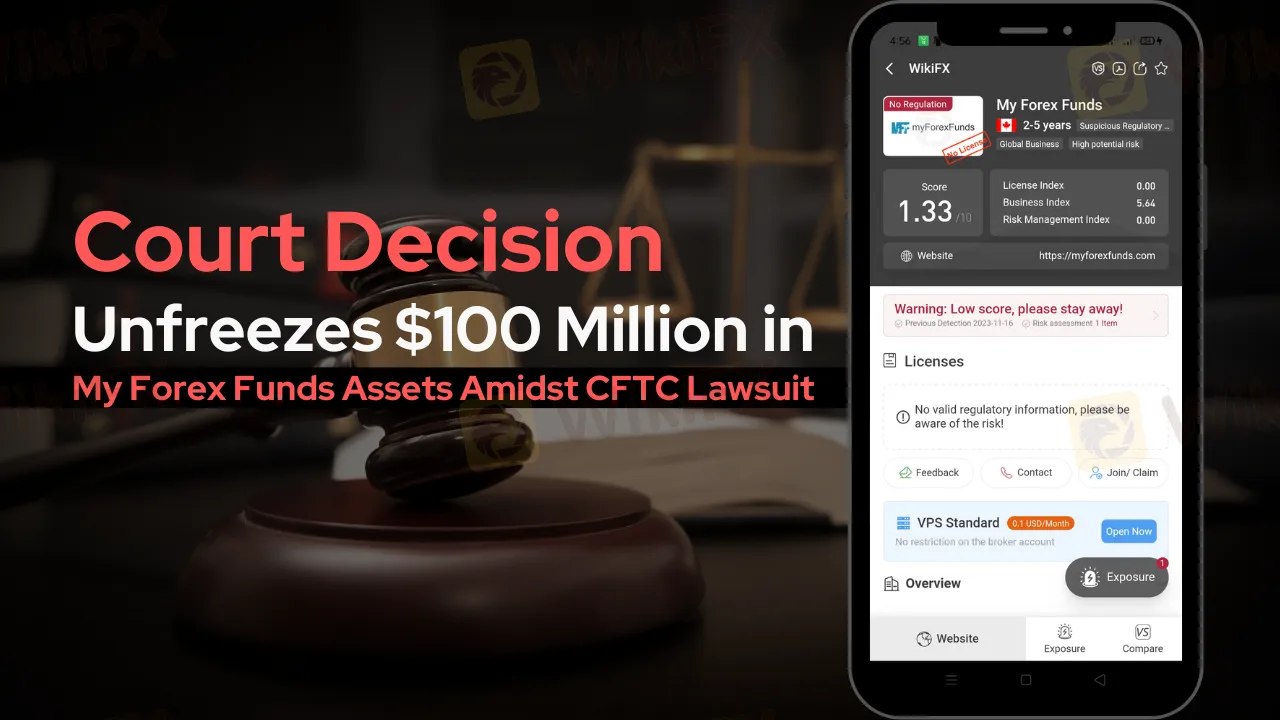
In a recent court ruling in New Jersey, My Forex Funds (MFF), a prominent player in the proprietary trading industry, achieved a significant legal victory. The court ordered the unfreezing of approximately $100 million of the company's assets, a decision that marks a turning point in the ongoing legal battle with the US Commodity Futures Trading Commission (CFTC).
Despite this win for MFF, the court has maintained the freeze on $12.08 million of the assets and rejected the proposal for a new temporary receiver. This ruling comes amid allegations by the CFTC against MFF and its CEO, Murtuza Kazmi, for fraudulent activities involving over $300 million.

MFF's defense team has vigorously contested the CFTCs allegations, arguing against the agency's jurisdiction and the nature of the statutory restraining order.
The CFTC's complaint highlights various deceptive practices in leveraged retail FX and commodity transactions, including unjust account terminations and unfavorable execution of customer orders.
The case illuminates broader concerns about proprietary trading practices, particularly regarding drawdown rules and revenue generation methods.
MFF, during the period under scrutiny, distributed $137 million to its clients, reflecting its substantial role in the prop trading sector.
MFF's Defense Stance
MFF's defense refutes the CFTC's portrayal of financial transactions, asserting that the funds in question were earmarked for Canadian tax authorities.
The defense also challenges the CFTCs claim regarding the solicitation and acceptance of customer investments, highlighting the firm's compliance with tax obligations.
CFTC's Concerns
The CFTCs investigation into MFF's operational practices raises questions about the transparency and legality of prop firms' income sources and payout mechanisms.
The focus is particularly on how trader payouts were funded and the use of evaluation fees.
Implications for the Proprietary Trading Industry
This case could set a precedent for how prop firms are regulated, especially regarding risk management measures and evaluation fees.
It underscores the need for greater clarity in the regulatory framework governing the proprietary trading sector.
The Commodity Futures Trading Commission (CFTC) is a key regulatory body in the United States, overseeing the futures, options, and derivatives markets. Established in 1974, the CFTC's mandate includes promoting competitive and efficient futures markets while protecting market participants against manipulation, abusive trade practices, and fraud. The CFTC plays a crucial role in ensuring the integrity of the financial markets, a responsibility that extends to overseeing entities like My Forex Funds.

As the legal proceedings continue, the unfolding case between My Forex Funds and the CFTC remains a focal point in the financial world. It highlights the evolving nature of regulatory challenges in the dynamic and complex domain of proprietary trading. The outcome of this case could potentially reshape regulatory approaches and compliance requirements within the industry, emphasizing the importance of transparency and fair trading practices.

Disclaimer:
The views in this article only represent the author's personal views, and do not constitute investment advice on this platform. This platform does not guarantee the accuracy, completeness and timeliness of the information in the article, and will not be liable for any loss caused by the use of or reliance on the information in the article.

IG review for India in 2026: see the RBI Alert List entry, overseas regulation, login checks, forex limits, and a clear broker safety checklist.

Orbex, a Cyprus-based brokerage entity, has recorded 30 exposure complaints on WikiFX, a leading forex broker regulation inquiry tool, so far. Other review websites have also recorded a healthy number of complaints against the brokerage firm. These complaints largely talk about the alleged profit confiscations by the broker in the name of trading violations, difficulty in accessing fund withdrawals, capital losses due to artificial slippage, etc. In this Orbex review, we have investigated user complaints and provided a regulatory overview of the broker.
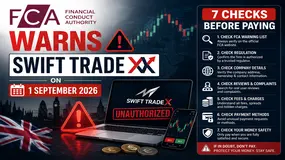
FCA warns Swift TradeX in a notice first published and updated on 1 September 2026. The UK Financial Conduct Authority says the firm may be providing or promoting financial services without permission, is not authorised, and may be targeting people in the UK. The notice names the website swifttradexai.com, a Worcester address and a UK telephone number, but also cautions that unauthorised businesses may use incorrect or borrowed contact details. The confirmed issue is authorisation status—not a court finding about every transaction. Anyone considering a payment should stop, verify the firm independently, and avoid using contact information supplied by the platform itself.

ThinkMarkets review for India: check the RBI Alert List, overseas entities, regulation, login security, forex rules, costs, withdrawals, and leverage risk.
WikiFXWikiFXWikiFXWikiFXWikiFXWikiFXWikiFXWikiFXWikiFXWikiFX