Abstract:SOUQ CAPITAL presents itself as a regulated multi-asset broker, but its profile, regulatory warning, and licence claims point to a much higher level of risk than the branding suggests.
SOUQ CAPITAL presents itself as a multi-asset trading platform offering forex, stocks, indices, commodities, and crypto through MetaTrader 5 and its own mobile app. Its public website says clients can access 500+ markets, while its app listing describes 400+ instruments including forex, CFDs, stocks, cryptocurrencies, indices, commodities, and ETFs. The companys contact pages list Saint Lucia as its address, and the site also promotes account types such as Premier, Classic, and Islamic accounts.
That is the public-facing version of the broker. The more important question is whether the regulatory picture behind that presentation holds up.
 Contents
WikiFX profile: low score, no verified forex licence
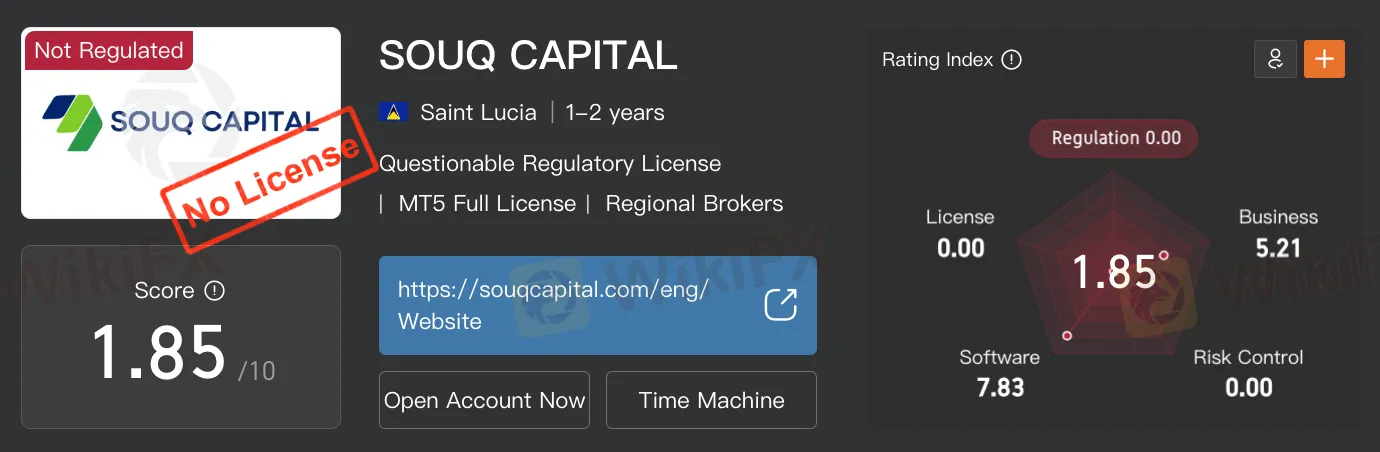
On WikiFX, SOUQ CAPITAL is shown with a score of 1.85/10 and a Not Regulated label. The profile also states that no forex trading licence has been found. In the score breakdown shown on the profile, the regulation, licence, and risk-control components are all at 0, while only software and business score above that level.
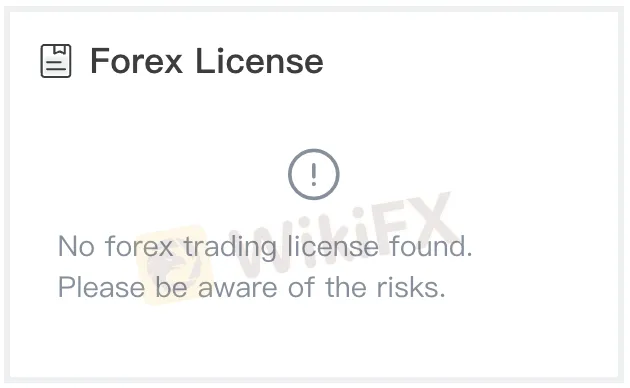
That alone would already place the broker in a high-risk category. A broker can have a working platform, app listings, and active branding while still lacking the kind of licence background that would normally support its claims.
Arabic-market focus, but a regulatory warning in Dubai
SOUQ CAPITAL is clearly aimed at Arabic-speaking users. Its public-facing channels and promotional materials are Arabic-heavy, and the review materials point to a strong audience concentration in Saudi Arabia. Its social presence across X, LinkedIn, YouTube, and TikTok is also geared toward Arabic-language outreach.
At the same time, the broker was publicly flagged by the Dubai Financial Services Authority. The DFSA said Souq Capital falsely claimed to be authorised by the DFSA and used a fake DFSA registration number. The regulator also stated that Souq Capital is not, and has never been, authorised by the DFSA.
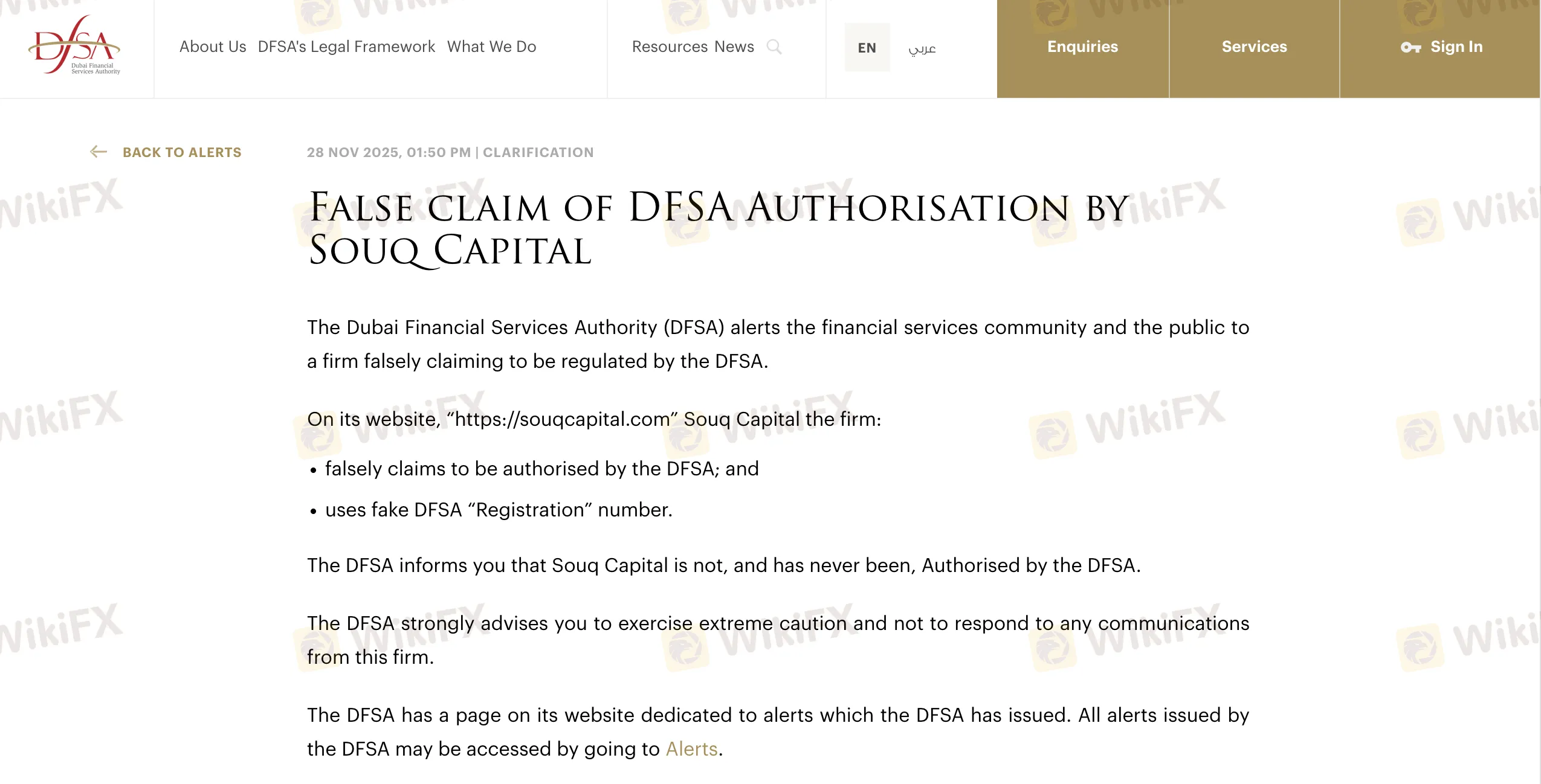
This is one of the most serious points in the overall review. It is not a case of unclear wording or a missing disclosure line. The warning directly addresses a false claim of DFSA authorisation.
“Licensed and regulated” appears across several channels
The problem becomes sharper when the brokers own wording is compared with the regulatory record.
On its website, SOUQ CAPITAL describes itself as fully licensed and regulated by international financial authorities. The same site also refers to segregated funds and regulated status. Its Google Play listing uses similar language, calling the company a licensed and regulated online broker.
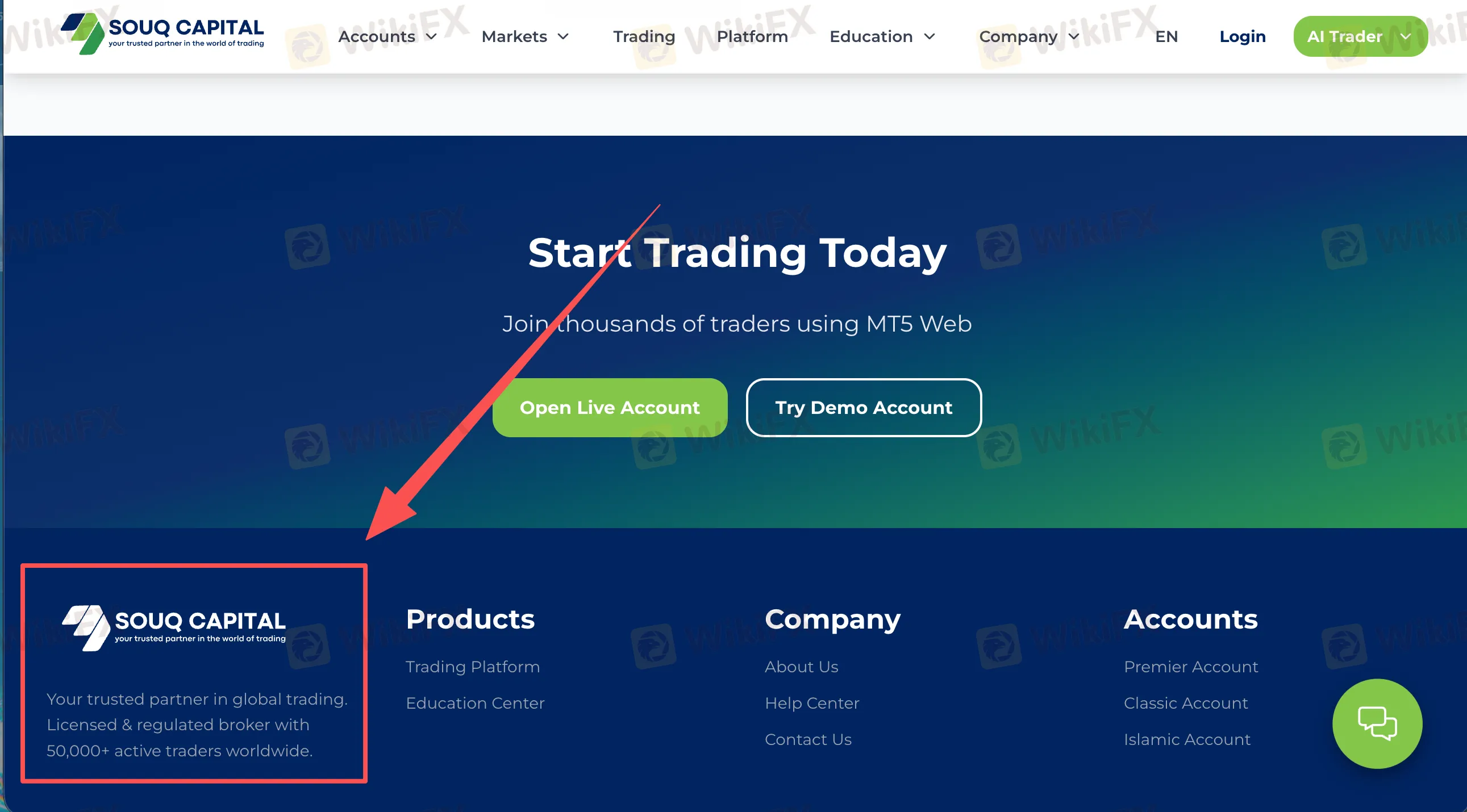
Those claims matter because they create a clear impression that the firm already holds recognised financial authorisation. Yet WikiFX shows no verified forex licence, and the DFSA has already stated that the brokers claim of DFSA authorisation is false.
This is where the risk stops being theoretical. The issue is not only that a broker is based offshore. The issue is that the brokers own regulatory presentation and the available regulatory record do not match.
What Saint Lucia registration does and does not mean
A Saint Lucia company filing is not the same thing as a forex or investment-services licence.
Saint Lucia‘s legal framework for International Business Companies (IBCs) is an incorporation regime. The law itself separates company incorporation from regulated financial activity. It specifically states that an IBC cannot carry on international banking business unless it is separately licensed under the relevant Saint Lucia law. Saint Lucia’s own financial-services framework also makes clear that activities such as money services business and international banking require a licence.
That distinction matters here. Even if a same-name company exists in the Saint Lucia IFC system, that would only establish corporate registration, not a recognised forex or financial-services licence by itself. In other words, IBC status is an administrative company status, not proof of trading authorisation.
So when a broker uses Saint Lucia company registration as if it were evidence of financial regulation, that creates a misleading impression of oversight that the underlying filing does not necessarily provide.
A brief note on regional regulators
This is also where the difference between several regional regulators becomes important.
The UAE Capital Market Authority, formerly the Securities and Commodities Authority, is the federal market regulator for the UAE. The DFSA, by contrast, is the independent regulator for financial services conducted in or from the DIFC, which is a separate financial free zone in Dubai. Saudi Arabias Capital Market Authority is another separate regulator with its own jurisdiction and rulebook. These are not interchangeable labels, and a broker cannot treat a company registration, a free-zone presence, and a recognised market-services licence as if they were the same thing.
Is SOUQ CAPITAL safe?
Viewed on appearance alone, SOUQ CAPITAL looks like a modern broker: multilingual branding, active app distribution, MT5 support, multiple account types, and broad product coverage.
Viewed on regulatory substance, the picture changes sharply.
WikiFX shows a very low score and no verified forex licence. The DFSA says the broker falsely claimed DFSA authorisation and used a fake registration number. The brokers own website and app listing continue to use “licensed and regulated” language that does not line up with that record.
Taken together, that makes the risk level here very high. The central issue is not the trading app or the range of instruments. It is the gap between the brokers regulatory presentation and the available evidence behind it.