


IG Review for India 2026: RBI Alert List, Regulation, Login, and Forex Risk
IG review for India in 2026: see the RBI Alert List entry, overseas regulation, login checks, forex limits, and a clear broker safety checklist.
Original

简体中文
繁體中文
English
Pусский
日本語
ภาษาไทย
Tiếng Việt
Bahasa Indonesia
Español
हिन्दी
Filippiiniläinen
Français
Deutsch
Português
Türkçe
한국어
العربية
اردو




Abstract:The US bond market's recent volatility is raising concerns. Learn why investors are paying close attention and how it may affect US tariffs and the economy.

After weeks of stock market turbulence triggered by US trade tariffs, global investors have shifted their focus to an often-overlooked area: the US bond market. Typically a stable cornerstone of finance, this market has recently seen unusual volatility, raising concerns about confidence in the world‘s largest economy. On April 21, 2025, as tariffs reshape economic landscapes, understanding the US bond market’s fluctuations is more critical than ever. Heres why this shift is significant, how it impacts everyday Americans.
Governments issue bonds—called “Treasuries” in the US—to fund public projects, promising interest payments over time until the bond matures. Investors, including pension funds and target="_blank" kwlink="6384064000816950219725">target="_blank" kwlink="6384064000971585773080">central banks like the Bank of England, buy these bonds for their reliability. Historically, US bonds have been a safe haven, especially during economic uncertainty when stock markets falter. Investors typically move cash into bonds to avoid the volatility of stocks, trusting the US governments ability to repay its debts.
Recent events have upended this norm. Following the “Liberation Day” tariff announcement on April 2, 2025, stock markets dipped, and investors initially sought refuge in US bonds. Investors began selling off bonds, driving up the interest rates—or yields—the US government must pay to borrow. The 10-year Treasury yield jumped from 3.9% to 4.5%, while the 30-year yield neared 5%. In the US bond market, even a 0.2% shift is notable, making these spikes alarming.
This sell-off reflects growing unease. Tariffs have injected uncertainty into the US economy, prompting investors to question the safety of Treasuries. Higher perceived risk means higher yields, as investors demand greater returns to offset potential losses. This loss of confidence could signal deeper economic challenges ahead.

The ripple effects of a volatile US bond market touch more than just Wall Street. When the government pays more to borrow, it strains public budgets, potentially cutting funds for services like healthcare or infrastructure. For ordinary Americans, the impact is even more tangible. John Canavan of Oxford Economics explains that rising government borrowing rates push up other lending rates—think mortgages, credit cards, and car loans. Businesses, particularly small ones, feel this pinch acutely, as higher borrowing costs can stifle growth and lead to layoffs.
Homeowners with fixed-rate mortgages (common in the US for 15–30 years) may be shielded short-term, but first-time buyers or those refinancing face steeper costs. Small business owners, who often use home equity as collateral, could also struggle. Banks, wary of risk, might tighten lending, slowing economic momentum further. The US bond market‘s instability, therefore, isn’t just a financial footnote—its a threat to jobs, homes, and growth.
This turmoil draws parallels to the UK’s 2022 mini-budget fiasco under Liz Truss. Her unfunded tax cuts triggered a bond sell-off, forcing the Bank of England to intervene to stabilize pension funds. Some speculated the US Federal Reserve might have faced a similar fate if the recent sell-off worsened. Though yields have steadied, they remain elevated, hinting at a lingering “risk premium” in US Treasuries, per Jonas Goltermann of Capital Economics. Unlike the UK, where short-term mortgage fixes amplified the pain, most Americans are insulated by long-term fixed rates—unless theyre buying or selling homes.
Foreign investors, especially China, loom large in this story. Since 2010, foreign ownership of US bonds has soared by $3 trillion, with Japan as the top holder and China a close second. As tariffs target China, some wondered if it dumped bonds in retaliation. Experts dismiss this, arguing China would harm itself more by devaluing its vast Treasury holdings. Still, its position as a major creditor underscores the global stakes of US bond market shifts.
The US bond market‘s sudden spotlight isn’t just for financial gurus. Its volatility signals economic uncertainty that could reshape government spending, raise borrowing costs, and slow growth. For Americans, its a reminder that even obscure markets can hit home, from mortgage rates to job security. As tariffs and bonds collide in 2025, this story is far from over.

Disclaimer:
The views in this article only represent the author's personal views, and do not constitute investment advice on this platform. This platform does not guarantee the accuracy, completeness and timeliness of the information in the article, and will not be liable for any loss caused by the use of or reliance on the information in the article.
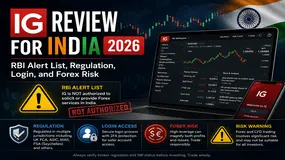
IG review for India in 2026: see the RBI Alert List entry, overseas regulation, login checks, forex limits, and a clear broker safety checklist.
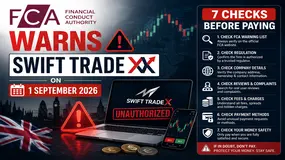
FCA warns Swift TradeX in a notice first published and updated on 1 September 2026. The UK Financial Conduct Authority says the firm may be providing or promoting financial services without permission, is not authorised, and may be targeting people in the UK. The notice names the website swifttradexai.com, a Worcester address and a UK telephone number, but also cautions that unauthorised businesses may use incorrect or borrowed contact details. The confirmed issue is authorisation status—not a court finding about every transaction. Anyone considering a payment should stop, verify the firm independently, and avoid using contact information supplied by the platform itself.
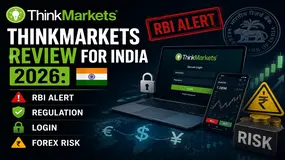
ThinkMarkets review for India: check the RBI Alert List, overseas entities, regulation, login security, forex rules, costs, withdrawals, and leverage risk.
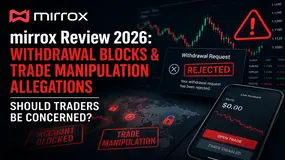
Did mirrox, a brokerage firm, ask you to keep your margin level above 250%-300% and make you add funds immediately if it dropped below it? Did the broker prevent you from opening a trade despite having a healthy equity balance? Did it close your trading account upon a withdrawal request? Many traders have raised these concerns online while sharing their respective mirrox reviews. This article aims to examine these user allegations while answering the popular question: Is mirrox legit or a scam?
WikiFXWikiFXWikiFXWikiFXWikiFXWikiFXWikiFXWikiFXWikiFXWikiFX