


FCA Warning Capital Zodiac 7 September 2026 and Seven Checks Before Paying
The FCA named Capital Zodiac as an unauthorised clone on 7 September 2026. Check capitalzodiac.com, capitalzodiac.net and FRN 806702 before paying.
Original

简体中文
繁體中文
English
Pусский
日本語
ภาษาไทย
Tiếng Việt
Bahasa Indonesia
Español
हिन्दी
Filippiiniläinen
Français
Deutsch
Português
Türkçe
한국어
العربية
اردو




Abstract:India’s banking sector is grappling with a significant cybersecurity crisis as a ransomware attack has forced nearly 300 small banks offline, according to a report by Reuters. The attack has severely disrupted transaction processing among the affected lenders, highlighting vulnerabilities within the country's financial system.

Indias banking sector is grappling with a significant cybersecurity crisis as a ransomware attack has forced nearly 300 small banks offline, according to a report by Reuters. The attack has severely disrupted transaction processing among the affected lenders, highlighting vulnerabilities within the country's financial system.
The Extent of the Disruption
The ransomware attack primarily targeted C-Edge Technologies, a crucial provider of banking technology to many of Indias smaller financial institutions. As a result, these banks have been cut off from the National Payment Corporation of India (NPCI) system, hampering their ability to process payments.
In a swift response to contain the attack, NPCI issued a public advisory on Wednesday. The advisory noted that NPCI had temporarily isolated C-Edge Technologies from accessing the retail payments system to prevent the ransomware from spreading further within the payment network.
Minimal Impact on the National Scale
Despite the considerable disruption for the affected banks, the overall impact on Indias payment system remains minimal. Regulatory officials have clarified that the banks impacted by the ransomware attack represent only about 0.5% of the country's total payment system volumes. India boasts approximately 1,500 cooperative and regional banks, predominantly operating outside major metropolitan areas. The institutions affected by this attack are a small subset of these banks.
Ongoing Security Measures and Audits
In response to the attack, NPCI is conducting a comprehensive audit to ensure the ransomware does not spread further. This proactive measure aims to safeguard the broader payment system's integrity. The Reserve Bank of India (RBI) and Indian cyber authorities have recently heightened their warnings to banks regarding the escalating risk of cyberattacks.
However, both C-Edge Technologies and the RBI have remained silent on the issue, not responding to requests for comments. This lack of communication has exacerbated concerns and uncertainty among the affected banks and their customers.
Broader Implications and Historical Context
This ransomware attack underscores a growing trend in cyber threats against the financial industry. According to the International Monetary Fund (IMF), over the past two decades, the financial industry has lost $12 billion due to more than 20,000 cyberattacks. This surge in cybersecurity incidents is attributed to the rapid digitalization of financial services and escalating geopolitical tensions.
The COVID-19 pandemic has further exacerbated the situation, with the number of cyberattacks on financial firms doubling. The direct losses incurred by companies in the sector have more than quadrupled since 2017, reaching $2.5 billion.
Conclusion
The ransomware attack on India's small banks serves as a stark reminder of the vulnerabilities within the financial system. While the immediate impact on the national payment infrastructure remains limited, the incident highlights the critical need for robust cybersecurity measures and enhanced preparedness to mitigate future threats. As digitalization continues to transform the banking sector, ensuring the security and resilience of financial institutions against cyber threats becomes increasingly paramount.

Disclaimer:
The views in this article only represent the author's personal views, and do not constitute investment advice on this platform. This platform does not guarantee the accuracy, completeness and timeliness of the information in the article, and will not be liable for any loss caused by the use of or reliance on the information in the article.
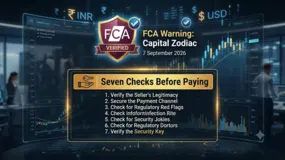
The FCA named Capital Zodiac as an unauthorised clone on 7 September 2026. Check capitalzodiac.com, capitalzodiac.net and FRN 806702 before paying.

This WEALTH-FX review starts with a licensing statement that needs verification. The client agreement on wealth-fx.com says the company is incorporated in St. Vincent and the Grenadines as 88102 LLC 2021 and is authorised and regulated by the SVG FSA. An official SVG FSA notice, however, says forex trading brokerage activities are not licensed in that jurisdiction. The same agreement separately names WealthFX Liquidity Limited, company 180782, and describes a Mauritius International License. For an India-based reader, those website claims do not replace RBI rules for permitted forex transactions or an independently confirmed licence record.

Did ePlanet, a Comoros-based brokerage, allegedly withhold your dollars on the platform? Did the broker prevent you from accessing the ePlanet login dashboard upon a withdrawal request? Did the broker platform execute trade orders slowly? Have you faced losses due to slippage? This ePlanet review 2026 evaluates user claims while also providing a regulatory overview of the broker.

FCA warns EXOTICINVEST in a notice first published and updated on 3 September 2026. The UK regulator identifies EXOTICINVEST TRADING AND INVESTMENT FIRM and the website www.exoticinvest.ltd, stating that the firm is not authorised and may be targeting people in the UK. This is a dated regulatory warning, not a customer review or a confirmed loss report. Anyone approached through the named website should stop before paying, avoid sharing login credentials and verify the exact business independently through the FCA Firm Checker.
WikiFXWikiFXWikiFXWikiFXWikiFXWikiFXWikiFXWikiFXWikiFXWikiFX