


India Q1 FY27 GDP Growth Hits 7.8%: 3 Scenarios for INR and Gold
India's Q1 FY27 GDP grew 7.8%, beating a 7.4% poll and RBI's 7.0% projection. See three conditional scenarios for INR, rates and gold.
Original

简体中文
繁體中文
English
Pусский
日本語
ภาษาไทย
Tiếng Việt
Bahasa Indonesia
Español
हिन्दी
Filippiiniläinen
Français
Deutsch
Português
Türkçe
한국어
العربية
اردو




Abstract:The European Union (EU) has endorsed the world's first comprehensive cryptocurrency regulations, requiring crypto-related firms to obtain a license. The new rules, designed to prevent money laundering and tax evasion, make crypto transactions traceable and mandate data sharing on tax rulings.
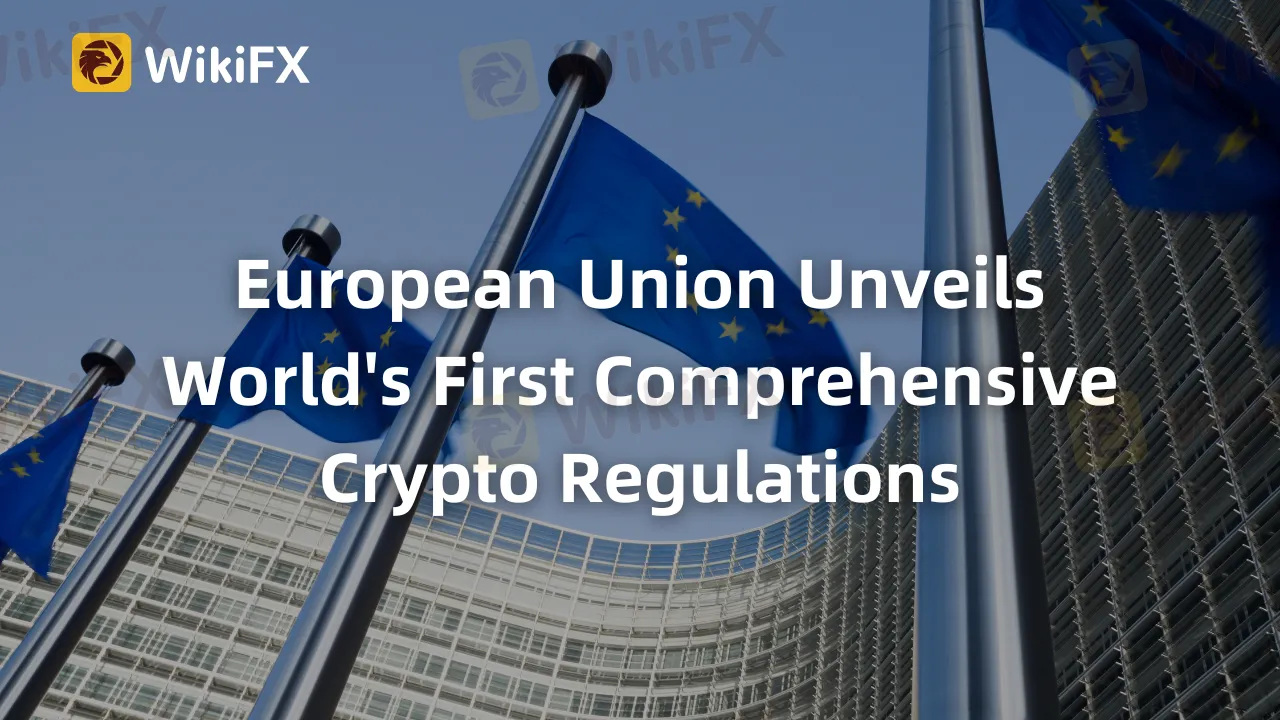
In an unprecedented move, European Union (EU) member states collectively endorsed the world's first holistic set of regulations for cryptocurrency assets on Tuesday. This pivotal decision is likely to incite countries such as the United States and the United Kingdom to accelerate their crypto regulatory efforts.
The crucial approval came during a meeting of EU finance ministers in Brussels, following a rigorous negotiation process with the European Parliament, which sanctioned these regulations in April. The urgency to regulate the crypto sector has been accentuated by the recent downfall of the FTX cryptocurrency exchange.
Elisabeth Svantesson, the Finance Minister for Sweden, which currently presides over the EU, underscored the vital importance of these regulations. “The necessity for introducing protective measures for European citizens invested in these assets and curtailing the exploitation of the crypto sector for money laundering and terrorist financing has been starkly highlighted by recent incidents,” she stated.
The newly approved regulations necessitate that any firm aiming to issue, trade, or safeguard crypto-assets, tokenized assets, and stablecoins within the 27-nation bloc obtain a license. The rules are an effort to provide a comprehensive framework for the burgeoning crypto sector, offering much-needed clarity for companies operating in this space.
In a bid to prevent tax evasion and money laundering using crypto-assets, the ministers have agreed to make these transactions more traceable. As of January 2026, service providers will be required to obtain the names of both senders and recipients involved in crypto-asset transactions, irrespective of the transaction amount.
Further, an agreement was reached on modifying the rules governing how member states cooperate on taxation matters to include transactions involving crypto-assets. This includes the exchange of information on advance tax rulings for the wealthiest individuals.
Crypto firms have long sought regulatory certainty, and the EU's move is likely to put pressure on other countries to adopt similar rules, and on global regulators to develop universal norms for cross-border transactions.
Meanwhile, the United Kingdom has proposed a phased regulatory approach, initially targeting stablecoins before expanding to un-backed crypto-assets at a later stage, though a concrete timeline is yet to be set.
The United States, on the other hand, has been focusing on the use of existing securities rules for enforcement actions in the sector while deliberating on whether to introduce specialized new rules and the bodies that would enforce them.
Hester Peirce, a commissioner at the U.S. derivatives regulator CFTC, acknowledged last week that numerous federal and state authorities are wrestling with determining their potential oversight role in the crypto sector. “We are wandering in the desert a bit,” Peirce confessed at a conference.
The EU's landmark decision on crypto regulation not only sets a new standard for the union itself but also presents a challenge to the global community to catch up. It remains to be seen how other nations will respond to this wake-up call.
Download and install the WikiFX App on your smartphone to stay updated on the latest news.
Download the App here: https://social1.onelink.me/QgET/px2b7i8n

Disclaimer:
The views in this article only represent the author's personal views, and do not constitute investment advice on this platform. This platform does not guarantee the accuracy, completeness and timeliness of the information in the article, and will not be liable for any loss caused by the use of or reliance on the information in the article.
India's Q1 FY27 GDP grew 7.8%, beating a 7.4% poll and RBI's 7.0% projection. See three conditional scenarios for INR, rates and gold.

Choosing a forex liquidity provider is not a search for the lowest displayed spread or the longest provider list. It is a broker decision about pricing integrity, depth, routing, credit, reporting, incident response, and client communication. This 2026 guide explains how a forex LP, FX liquidity provider, or liquidity provider forex arrangement fits into a broker’s execution chain; what to test before onboarding; why a “best forex liquidity provider” claim cannot replace due diligence; and how to compare cost beyond commission. Use the execution-quality scorecard, provider questions, routing scenarios, and 90-day onboarding plan to assess whether a liquidity relationship can support your actual client mix, instruments, risk model, and jurisdiction. The goal is not to make a universal ranking. It is to build evidence that your broker can explain, supervise, reconcile, and recover its execution service when market conditions are difficult.

We all love trading geniuses and their strategies that earn them profits season after season. And we also love following them to make our investment journey seamless. Copy trading is one such tactic that beginners employ to enter the forex market. What do most of them usually do? They pick an experienced investor from the list and let the platform replicate every trade automatically. The fact that experienced traders continually earn profits, the feeling of copying their trades remains intense. However, the uncertain forex landscape can bite you hard by simply copying trades and not focusing on technical analysis and the charts during the day. Beginners can have a set of preconceived notions that can potentially open the gate for losses. In this article, we have highlighted such mistakes traders should avoid.

As the global forex market continues to move toward regulatory convergence and greater transparency, “trust,” a concept long and frequently emphasized, is gradually evolving from a subjective perception into a quantifiable and verifiable industry standard. WikiFX announces that its industry initiative, “Let Trust Be Seen,” has achieved phased results, attracting broad attention and participation worldwide.
WikiFXWikiFXWikiFXWikiFXWikiFXWikiFXWikiFXWikiFXWikiFXWikiFX